

Homage to the Square is a collective exploration of color and spatial relationships, in which Albers limited himself to square formats, solid colors, and precise geometry, yet was able to achieve a seemingly endless range of visual effects. - from the Met Museum
The simplicity of his materials (squares) lend itself easily to teaching young children. This is a project you can do at home or in your classroom with relative ease and endless color combinations.
Albers' Squares
gather
various colored paper
scissors
glue
ruler
make
: Start by cutting the paper into different sized squares, making sure there are multiple colors for each size. (Try the sizes: 4x4, 3x3, 2x2)
: Now help your child place the squares on top of one another in descending order. (This is a great exercise for younger children because it helps them learn order/size. You might want to use the words "big," "bigger" and "biggest" to describe the squares)
: Once the squares and color combos are just right, you can glue them together.


discuss
: Albers liked paper (although he didn't solely use paper in his work), in part because of its consistency in color. Show your child how one color can look differently when paired with other colors (eg red with orange and yellow vs. red with blues), then place the two pieces side by side. Ask your child what they notice about the color red now. Does it appear to be the same color in each piece? Maybe it's darker in one than in another. Why might this be?
: The placement of certain colors can create an optical illusion as well. Depending on the color and placement of the square what do you notice about its appearance - does it appear to be sinking in to the painting, or far away? Perhaps it looks like it's floating. The various color combinations can create different effects in this way.
read
: For the kids : For the grown ups
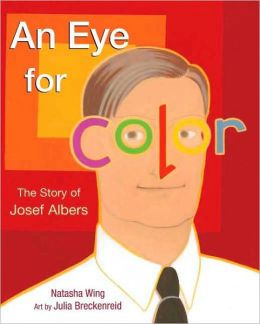
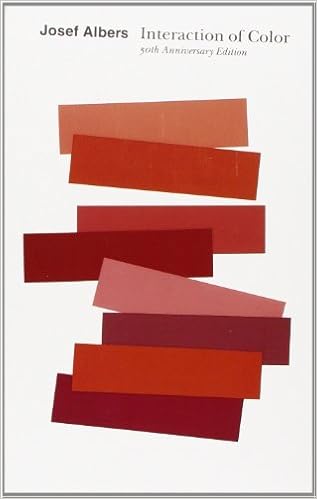
: click here to download Albers Lesson Plan


No comments
Post a Comment